
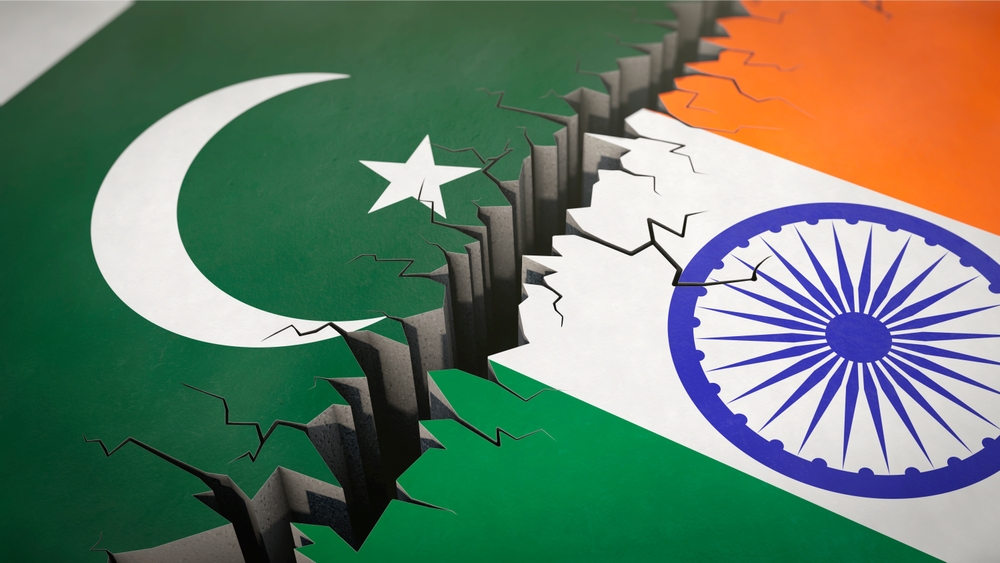
Beyond the Battlefield:
The 2025 India-Pakistan War and the Erosion of Indian Hegemony
Sarker Md Billal Hossain
(Doctoral student, Graduate School of Law, Hitotsubashi University)
February 9, 2026
Introduction
With the 1947 Partition, India became a Hindu-majority country,[1] while Pakistan became a Muslim-majority country.[2] Since then, the two countries have faced numerous disputes related to religion, culture, politics, and borders. India and Pakistan have experienced repeated wars and ongoing tensions, primarily over the Kashmir conflict and cross-border terrorism. They fought wars in 1947-1948 over Kashmir, in 1965 due to Pakistan’s attempt to infiltrate Jammu and Kashmir,[3] in 1971 during the Bangladesh Liberation War, and in 1999 during the Kargil conflict, when Pakistani forces occupied Indian territory in Kashmir. In these earlier wars, Pakistan pursued a more aggressive policy, however since the 1999 war, its stance has become relatively more restrained.
Relations have worsened in recent years due to India’s increasingly hardline policies toward its Muslim minority and in March 2025, the Indian government introduced the controversial “Waqf (Amendment) Bill-2024,” widely seen as an attempt to seize Muslim-owned religious property.[4] Muslim leaders and opposition parties condemned the bill as unconstitutional and discriminatory. The move triggered widespread protests among Indian Muslims. The government’s heavy-handed police crackdown on demonstrators further escalated unrest, deepening communal and regional tensions.
On April 22, 2025 amid growing unrest in India, five armed militants infiltrated Pahalgam in Indian-administered Jammu and Kashmir and launched a brutal attack on civilians visiting Baisaran Valley, Pahalgam. The attackers, equipped with M4 carbines and AK-47 rifles, targeted a tourist group, killing 26 people, 24 of whom were Hindu men, along with a Christian tourist and a local Muslim.[5] The terrorist entered the tourist spot in Baisaran Valley surrounded by dense pine forests.[6] A relatively new militant outfit called Kashmir Resistance, also known as The Resistance Front (TRF), established in 2019, initially claimed responsibility on social media but it has reportedly since walked back that claim, according to multiple local media reports.[7] In a message that appeared on Telegram TRF opposed the granting of residency permits to outsiders, who critics say could help India change the demography of the disputed region.[8] This incident is considered the deadliest attack on civilians in India since the 2008 Mumbai attacks.[9] Although India and Pakistan have experienced long-term strained relations, this tragic incident served as the immediate trigger for the most recent escalation into war.
The War
Between India and Pakistan, Kashmir has remained the most contentious flashpoint leading to several conflict and numerous skirmishes.[10] Despite multiple peace efforts, including the Lahore Declaration and Agra Summit, the Kashmir dispute continues to fester. On August 5, 2019 the government of India revoked the special status, or autonomy, granted under Article 370 of the Indian constitution to Jammu and Kashmir, a region administered by India as a state. The region, which constitutes the larger part of Kashmir, has been the subject of dispute among India, Pakistan, and China since 1947.[11] After the revocation of Article 370 in 2019, the situation gradually became more complex. The recent “Waqf (Amendment) Bill-2024” further deepened the sense of disappointment among the Muslim community.[12] In response, some aggressive Muslim groups expressed their rage, and the Pahalgam attack further provoked India to launch a direct military response against Pakistan.
Two weeks after the deadly militant attack on tourists in Indian-administered Kashmir, on May 7, 2025, midnight airstrikes carried out by the Indian Air Force hit nine locations inside Pakistan and Pakistan-occupied Kashmir (PoK), in a move named Operation Sindoor.[13] This was the first time since 1971 that India had directly attacked Pakistan with the full air force power. The attack was presumably carried out by the Rafale aircraft of the Indian Air Force using SCALP missiles and AASM Hammer glide bombs over a 23-minute duration.[14] The Indian military claimed that the missile strikes targeted the infrastructure of terrorist groups Jaish-e-Mohammed and Lashkar-e-Taiba, and no Pakistani military facilities were targeted.[15]
On this night, India forces also lost three Rafales, one MiG-29, one SU-30MKI, and an unmanned aerial vehicle.[16] Owing to the substantial losses sustained by the Indian Air Force, it was compelled to adopt a defensive posture on the first day of the war.
After the attack, the Indian defense ministry said the strikes named Operation Sindoor were part of a commitment to hold accountable those responsible for the 22 April attack in Pahalgam. But Pakistan, which has denied any involvement in that attack, described the strikes as unprovoked, with Prime Minister Shehbaz Sharif saying the heinous act of aggression will not go unpunished.[17] PM Sharif said the Pahalgam attack wasn’t related to Pakistan, and that his country was accused for the wrong reasons.[18]
In response to India’s Operation Sindoor, Pakistan launched Operation Bunyan al-Marsous on May 10, 2025. This operation was Pakistan’s direct military retaliation to India’s strikes in Pakistan and Pakistan-administered Kashmir.[19]
Operation Bunyan al-Marsous encompassed a range of military actions, including missile strikes and cyber warfare, aimed at delivering a robust response to India’s Operation Sindoor. The launch of Operation Bunyan al-Marsous marked a critical escalation in the 2025 India-Pakistan conflict. The ensuing military engagements between the two nations led to heightened tensions and international concern, culminating in a ceasefire agreement on May 10, 2025, with the intervention of the United States.[20] India said that 21 civilians and five military personnel had died in the conflict.[21] Pakistan claimed that 51 people had been killed in the clashes, including 40 civilians and 11 military personnel.[22] As of now, the amount of financial loss has not been revealed by either country.
Disinformation and Media Trail During the War
During the 2025 India-Pakistan war, social media and disinformation were crucial in influencing public opinion, especially during Operation Sindoor in India and Operation Bunyan al-Marsous in Pakistan. Both sides used internet forums to defame the enemy, stir up nationalism, and change public opinion both at home and abroad. Platforms like X (formerly Twitter), Facebook, TikTok, and WhatsApp were overrun in India with unverified content and old footage that was misrepresented as current events. Examples of such footage include the 2020 Beirut explosion and the Russia-Ukraine war. Due to the remarkable speed at which these narratives spread, often aided by partisan influencers and bots, it is becoming increasingly difficult for fact-checkers and traditional media to dispel false information in real time, which exacerbates public confusion and shapes policy discussions.
In Pakistan, pro-military media initially downplayed Indian strikes, denying damage to strategic locations such as the Nur Khan Airbase. However, international satellite imagery and news reports forced a narrative shift, framing India’s actions as unjustified aggression. Fabricated videos of drone and missile attacks on Indian cities also circulated widely. One viral clip, misrepresented as an Indian pilot captured in Pakistan, was later debunked by the Pakistani military. In a press briefing they stated that there was no Indian pilot in their custody. Across both nations, fake news, AI-generated visuals, and recycled war footage spread rapidly, overwhelming fact-checkers.
Impact of the Ceasefire on Indian Hegemony
The ceasefire following the 2025 India-Pakistan conflict carries significant geopolitical implications for India’s perceived hegemonic role in South Asia. Although India demonstrated substantial military capability, its eventual acceptance of a ceasefire reportedly mediated by the United States suggests clear limitations to its unilateral strategic dominance. During a post-ceasefire press briefing a Pakistani journalist asked the Director General of Inter Services Public Relations, Lt. Gen. Ahmed Sharif Chaudhry, who had initiated the talks. He stated:
“Pakistan did not seek ceasefire talks. It was India that contacted Pakistan first through diplomatic and backchannel communications, requesting de-escalation after our military response under Operation Bunyan al-Marsous.”[23]
India has neither denied nor officially responded to this claim, and the public has framed the ceasefire as a symbolic victory. This comes amid India’s increasingly assertive foreign policy, which has already strained ties with Nepal and Bhutan over border disputes and trade frictions. Tensions with Bangladesh have also escalated, particularly after India granted asylum to former Prime Minister Sheikh Hasina, prompting diplomatic pressure from Dhaka’s interim government.[24]
India’s launch of Operation Sindoor was widely seen as an attempt by Prime Minister Modi to reaffirm India’s regional dominance. However, Pakistan’s retaliatory strikes on May 10, 2025, under Operation Bunyan al-Marsous, delivered unexpected blows to India’s military. Within five hours, Pakistani forces reportedly targeted key Indian Air Force bases Udhampur, Pathankot, Adampur, Bhuj, and Suratgarh and destroyed an S-400 air defense system at Adampur using a hypersonic missile launched by a JF-17 Thunder jet.[25] Indian officials have denied this claim.
Following the strikes, India requested U.S. mediation to halt hostilities. This not only highlighted shortcomings in India’s military preparedness but also signaled vulnerability to regional rivals, particularly China. The ceasefire outcome has led to critical reassessments of India’s strategic posture, both domestically and internationally. While it may have averted further escalation, it has also cast doubt on India’s capacity to maintain unchallenged regional leadership in an increasingly contested South Asian landscape.
Conclusion
The 2025 India-Pakistan conflict, triggered by the Pahalgam attack and escalating into Operations Sindoor and Bunyan al-Marsous, revealed South Asia’s fragile power balance. India’s bid for dominance was met with Pakistan’s swift retaliation, strategic messaging, and diplomatic agility. Disinformation worsened public confusion and heightened tensions. India’s acceptance of a U.S.-mediated ceasefire was seen as an erosion of Indian power. Meanwhile, India’s fraying ties with Bangladesh, Nepal, and Bhutan, and growing unease with China indicate weakening regional influence. The conflict highlighted the urgent need for restraint, credible information, and crisis management. Without diplomatic recalibration and inclusive regional dialogue, future conflicts may further destabilize South Asia’s already volatile geopolitical landscape.
[1] “The Major Religions in India,” WorldAtlas, 20 September 2020 (https://www.worldatlas.com/articles/major-religions-in-modern-india.html Accessed on September 22, 2025) [2] Nadeem, Reem (21 December 2022), “Key Findings From the Global Religious Futures Project,” Pew Research Center (https://www.pewresearch.org/religion/2022/12/21/key-findings-from-the-global-religious-futures-project/ Accessed on September 22, 2025) [3] Prasad, S.N., and Dharm Pal, History of Operations in Jammu and Kashmir 1947–1948, New Delhi: History Department, Ministry of Defense, Government of India (printed at Thomson Press (India) Limited), 1987, p. 418. [4] Cherylann Mollan, “India Passes Controversial Bill on Muslim Properties After Fierce Debate,” BBC News (April 4, 2025) (https://www.bbc.com/news/articles/cwyn87ly1pqo Accessed on September 22, 2025) [5] Rhea Mogul, Aishwarya S. Iyer, and Sophia Saifi, “A Tourist Massacre in Kashmir Is Escalating Tensions Between India and Pakistan. Here’s What We Know,” CNN (April 28, 2025) (https://edition.cnn.com/2025/04/24/india/pahalgam-india-pakistan-attack-explainer-intl-hnk Accessed on May 16, 2025); Danish Manzoor Bhat, “Kashmir Massacre: Trump, Putin, Iran, Israel Condemn Jihadist Attack on Hindu Tourists,” Newsweek (April 22, 2025) (https://www.newsweek.com/kashmir-massacre-trump-putin-iran-israel-condemn-jihadist-attack-hindu-tourists-2062760 Accessed on May 16, 2025); Suhasini Raj and Mujib Mashal, “Killing of Civilians Near Pahalgam in Kashmir Shatters Illusion of Calm,” The New York Times (April 23, 2025) (https://www.nytimes.com/2025/04/23/world/asia/kashmir-attack-india-pakistan.html Accessed on May 16, 2025); Rajesh Roy, “Indian Survivors Of Kashmir Attack Say Gunmen Asked If They Were Hindus and Opened Fire,”AP News (April 30, 2025) (https://apnews.com/article/a5492962cd86174262cb73b85c04c51a Accessed on May 16, 2025). [6] Mahender Singh Manral, “Pahalgam Terror Attack | Terrorists Were Wearing Camouflage Outfits, Carried F Carbine, AK-47s, Fired 70 Rounds: Initial Probe,” The Indian Express (April 23, 2025) (https://indianexpress.com/article/india/pahalgam-terror-attack-terrorists-were-wearing-camouflage-outfits-carried-m4-carbine-ak-47s-initial-probe-9959852/ Accessed on May 19, 2025) [7] Rhea Mogul, Aishwarya S. Iyer, and Sophia Saifi, “A Tourist Massacre In Kashmir Is Escalating Tensions Between India and Pakistan. Here’s What We Know,” CNN, 28 April 2025 (https://edition.cnn.com/2025/04/24/india/pahalgam-india-pakistan-attack-explainer-intl-hnk Accessed on 16 May 2025) [8] Yashraj Sharma, “What Is The Resistance Front, the Group Claiming the Deadly Kashmir Attack?,” Al Jazeera, April 23, 2025 (https://www.aljazeera.com/news/2025/4/23/what-is-the-resistance-front-the-group-behind-the-deadly-kashmir-attack Accessed on 16 May 2025) [9] Vijaita Singh, “Pahalgam Terrorist Attack: Terrorists Mingled With Crowd, Herded Them Towards Armed Members Who Killed Tourists at Baisaran,” The Hindu (May 3, 2025) (https://www.thehindu.com/news/national/pahalgam-attack-terrorists-mingled-with-crowd-herded-them-towards-armed-members-who-killed-toursists-at-baisaran/article69534814.ece [10] Shuja Nawaz, “The First Kashmir War Revisited,” India Review, 7-2 (May 2008), pp. 115–154 (https://doi-org.hit-u.idm.oclc.org/10.1080/14736480802055455) [11] Rais Akhtar and William Kirk, “Jammu and Kashmir, State, India,” Encyclopædia Britannica (https://www.britannica.com/place/Jammu-and-Kashmir Accessed on May 16, 2025) [12] “Indian Parliament’s Lower House Passes Controversial Muslim Endowments Bill,” Al Jazeera (April 3, 2025) (https://www.aljazeera.com/news/2025/4/3/indian-parliaments-lower-house-passes-controversial-muslim-endowments-bill Accessed on May 21, 2025). [13] Rudra Chowdhury, “Indian Airstrikes in Pakistan May 7, 2025,” Carnegie Endowment for International Peace (May 7, 2025) (https://carnegieendowment.org/posts/2025/05/indian-airstrikes-in-pakistan-may-7-2025?lang=en Accessed on May 19, 2025) [14] Shivani Sharma and Manjeet Negi, “Rafale Jets Hit Pak Terror Camps With Scalp Missiles, Hammer Bombs: Sources,” India Today (May 7, 2025) (https://www.indiatoday.in/india/story/rafale-jets-pak-terror-camps-operation-sindoor-pahalgam-attack-retaliation-2720674-2025-05-07 Accessed on May 19, 2025) [15] Shubhajit Roy and Amrita Nayak Dutta, “‘Justice Is Served’: India Launches ‘Operation Sindoor,’ Strikes on Pakistan, Headquarters of LeT and JeM,” The Indian Express (May 7, 2025) (https://indianexpress.com/article/india/operation-sindoor-india-pakistan-pok-lashkar-e-taiba-jaish-e-muhammad-9987644/ Accessed on May 19, 2025) [16] Hamish Mackay, Martin Belam, Jonathan Yerushalmy, and Léonie Chao-Fong, “Shehbaz Sharif Authorises ‘Corresponding Action’ After India Strikes Kill 26 – As It Happened,” The Guardian (May 7, 2025) (https://www.theguardian.com/world/live/2025/may/06/pakistan-india-attacks-kashmir-live-updates Accessed on May 19, 2025) [17] “Pakistan Says India’s ‘Heinous’ Strikes Will ‘Not Go Unpunished’,” Channel News Asia (May 7, 2025) (https://www.channelnewsasia.com/asia/kashmir-crisis-pakistan-says-indias-heinous-strikes-will-not-go-unpunished-5114931 Accessed on May 21, 2025) [18] Rhea Mogul, Aishwarya S. Iyer, and Sophia Saifi, “A Tourist Massacre In Kashmir Is Escalating Tensions Between India and Pakistan. Here’s What We Know,” CNN (April 28, 2025) (https://edition.cnn.com/2025/04/24/india/pahalgam-india-pakistan-attack-explainer-intl-hnk Accessed on May 21, 2025) [19] “Pakistan Launches Operation Bunyan Marsoos: What We Know So Far,” Al Jazeera (May 10, 2025) (https://www.aljazeera.com/news/2025/5/10/pakistan-launches-operation-bunyan-marsoos-what-we-know-so-far Accessed on May 21, 2025) [20] Shah Meer Baloch and Hannah Ellis-Petersen, “From Missiles to Ceasefire: How India and Pakistan Pulled Back From the Brink,” The Guardian (May 12, 2025) (https://www.theguardian.com/world/2025/may/12/how-india-and-pakistan-conflict-turned-from-brink-of-war-to-ceasefire-in-days Accessed on May 21, 2025) [21] “India-Pakistan Ceasefire Appears to Hold After Accusations of Violations,” BBC (May 13, 2025) (https://www.bbc.com/news/articles/cvg9d913v20o Accessed on May 21, 2025). [22] “Pakistan Says Over 50 Killed in Last Week’s India Clashes,” DW (May 13, 2025) (https://www.dw.com/en/pakistan-says-over-50-killed-in-last-weeks-india-clashes/a-72528430 Accessed on May 21, 2025) [23] “Ceasefire Request Came from India, Says DG ISPR,” The Express Tribune (May 13, 2025) (https://tribune.com.pk/story/2545349/ceasefire-request-came-from-india-says-dg-ispr Accessed on May 21, 2025) [24] Anbarasan Ethirajan and Vikas Pandey, “India’s Bangladesh Dilemma: What to Do About Sheikh Hasina?” BBC News (September 3, 2024) (https://www.bbc.com/news/articles/cg4ypkpx1rqo Accessed on May 21, 2025) [25] “Pakistan Destroys India’s S-400 Air Defense System in Adampur,” The Express Tribune (May 10, 2025) https://tribune.com.pk/story/2545068/pakistan-destroys-indias-s-400-air-defence-system-in-adampur (accessed May 21, 2025)
Sarker Md Billal Hossain is a Bangladeshi doctoral student at the Graduate School of Law, Hitotsubashi University in Tokyo, Japan, where he is researching green innovation and international relations. Before beginning his doctoral studies, Hossain earned a master’s degree from the School of International and Public Policy at Hitotsubashi University. He also achieved his B.B.A. and M.B.A degree major in Finance from Chittagong University, Bangladesh. He has previously published another article under the banner of GGR.